Most guides to toll-free forwarding explain what it is and stop there. This one covers the part that actually costs you money: how the calls are routed underneath, where the pricing hides, and the mistakes we see businesses make when they buy toll-free service from a retail provider instead of going closer to the carrier.
What is toll-free forwarding?
Toll-free forwarding is a service that lets customers call a toll-free number — one they pay nothing to dial — and have that call automatically routed to any destination you choose: an office line, a mobile, a call centre, or a SIP-based phone system anywhere in the world. The business that owns the number pays for the inbound call instead of the caller.
The “forwarding” part is the key: the toll-free number isn’t tied to a physical phone. It’s a routing instruction. Calls to it get sent wherever you point them, and you can change that destination whenever you like.
How toll-free forwarding actually works
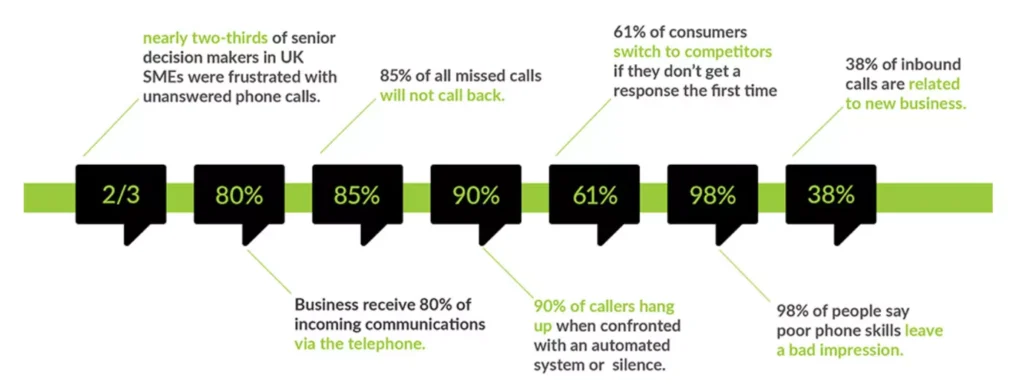
At the surface level, it’s simple: you get a special number, people call it for free, and the calls arrive at your chosen destination. But it’s worth understanding what happens underneath, because that’s where cost and quality are decided.
When someone dials your toll-free number, the call enters the telephone network and hits a database lookup. Toll-free numbers aren’t geographic — there’s no city or exchange they “belong” to — so the network has to look up who owns that number and where they’ve asked calls to be routed. That routing instruction sends the call to your destination: a SIP trunk, a landline, a mobile, or a call-routing platform.
The three components that matter:
- The toll-free number — the number customers dial for free. In the US these start with 800, 888, 877, 866, 855, 844, and 833. Other countries have their own toll-free ranges and their own dialling rules.
- The routing layer — the instruction that says where calls to this number go. This is what makes it “forwarding” rather than a fixed line.
- The carrier — the network that actually carries the call from the caller to your destination, and bills you for the minutes.
That last one is where most of the cost and most of the quality live, and it’s the part the generic guides skip.
The benefits — and who they actually matter to
The standard benefits list applies: toll-free numbers remove the cost barrier for customers, project a professional and established image, let you advertise a presence in markets where you have no physical office, and give you the flexibility to route calls to different places by time of day, department, or call volume.
But it’s worth being precise about who each benefit serves, because “good for everyone” is rarely a useful way to buy anything.
For a customer-facing business — a support line, a sales line — the accessibility and professional-image benefits are the point. A toll-free number that a customer can call for free measurably increases the number of people who actually pick up the phone.
For a business operating across borders, the real value is presenting local, free-to-dial numbers in each market without a physical office there. A toll-free number with the right country prefix means a customer in another country calls a local-looking number for free, and the call routes back to wherever your team actually is.
For a reseller or platform builder, toll-free forwarding is a wholesale input — something you buy at carrier rates and resell to your own customers with your margin on top. For this buyer, the entire decision comes down to per-minute economics, which we’ll get to.
Setting up toll-free forwarding
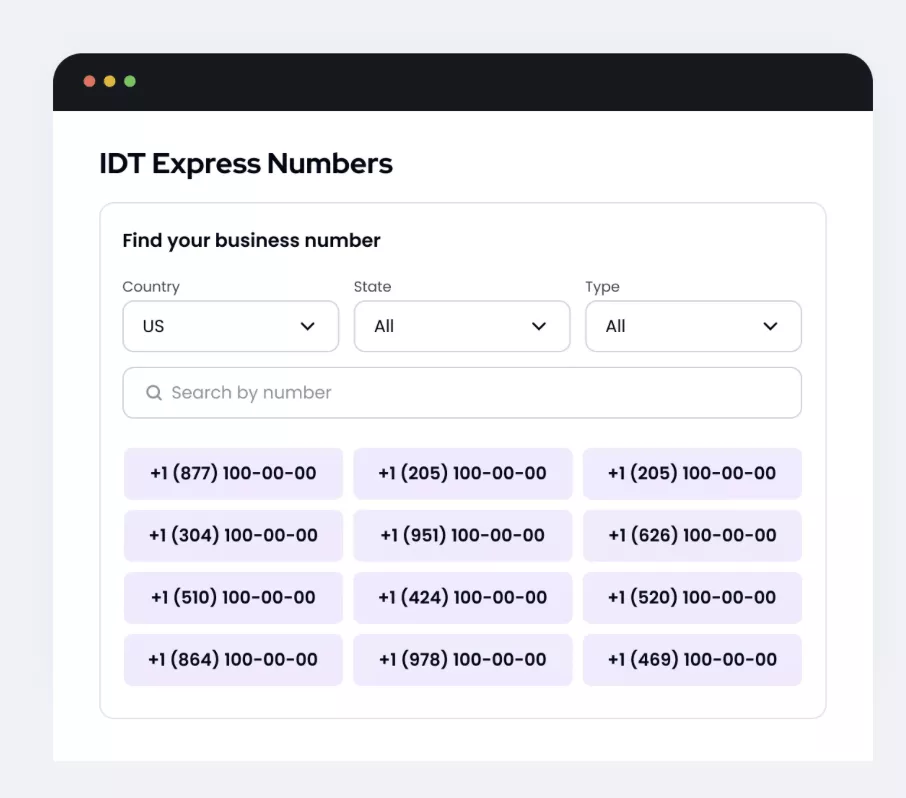
The setup itself is genuinely fast — usually two steps. First, select and provision your toll-free number with a provider (IDT Express offers toll-free numbers across 60+ countries). Second, point its forwarding to your destination — a SIP endpoint, a phone number, or a routing platform. Once activated, calls to the number start arriving at your destination immediately.
The speed of setup, though, is not where the decision should be made. Any provider can activate a number in minutes. The decision that matters is the one underneath it: how the calls are billed and routed once the number is live.
What toll-free forwarding actually costs — and where the cost hides
This is the section most guides gloss over, and it’s the one that determines whether toll-free forwarding is a smart investment or a slow leak.
Toll-free is a reverse-charge service: the number owner pays for the inbound minutes. That means your cost scales directly with how many calls you receive and how long they last. Three pricing models are common:
Pay-as-you-go — no monthly commitment, you pay per minute. Best for low or unpredictable volume, but the per-minute rate is the highest of the three.
Minutes-included plans — a monthly fee bundles a set number of minutes at a better per-minute rate, with overage charged above the bundle. Suits steady, predictable volume.
High-volume packages — the lowest per-minute rate, for businesses with consistent heavy volume, often with account management attached.
Here’s the part that isn’t on the pricing page: the per-minute rate you’re quoted usually includes a retail markup over the underlying carrier cost. Toll-free termination has a wholesale rate — what the carrier actually pays to deliver the minute — and most toll-free providers layer their margin on top of that before they quote you.
For a business receiving a modest volume of toll-free calls, that markup is barely noticeable. For anyone at scale, it compounds quickly. Consider the illustrative math: a business handling 200,000 toll-free minutes a month at a retail rate of, say, 2.2 cents a minute pays $4,400 a month. The same volume at a wholesale rate closer to 1.2 cents is $2,400 — a difference of $2,000 every month, or $24,000 a year, for delivering exactly the same calls. The calls sound identical. The only difference is how many layers of margin sit between you and the carrier.
This is the single most important thing to understand about toll-free forwarding economics: the closer you buy to the carrier, the less margin you’re paying on every minute — and toll-free minutes add up fast because you pay for all of them.
The routing mistake that quietly inflates the bill
A pattern we see repeatedly, from the engineering side: a business sets up toll-free forwarding to route calls to a destination that then re-routes them again. A toll-free number forwards to an office SIP trunk, which forwards to a call-centre platform, which forwards to agents. Each hop is a separate leg, and depending on how it’s configured, each leg can be a separately billed minute.
The call the customer experiences as one conversation can be two or three billed legs underneath. Multiply that across every toll-free call, and you’re paying two or three times the minutes you think you are.
The fix is to flatten the routing — forward the toll-free number as directly as possible to the final destination, ideally a single SIP trunk that hands the call straight to your platform. Fewer legs, fewer billed minutes, lower latency, and a cleaner call. This is invisible on any pricing page; it only shows up when you look at how the call actually traverses the network.
Choosing a toll-free forwarding provider
The generic checklist — features, uptime, support, scalability, number availability — all matters, and you should assess each. But for a buyer who understands the economics above, the questions that actually separate providers are sharper:
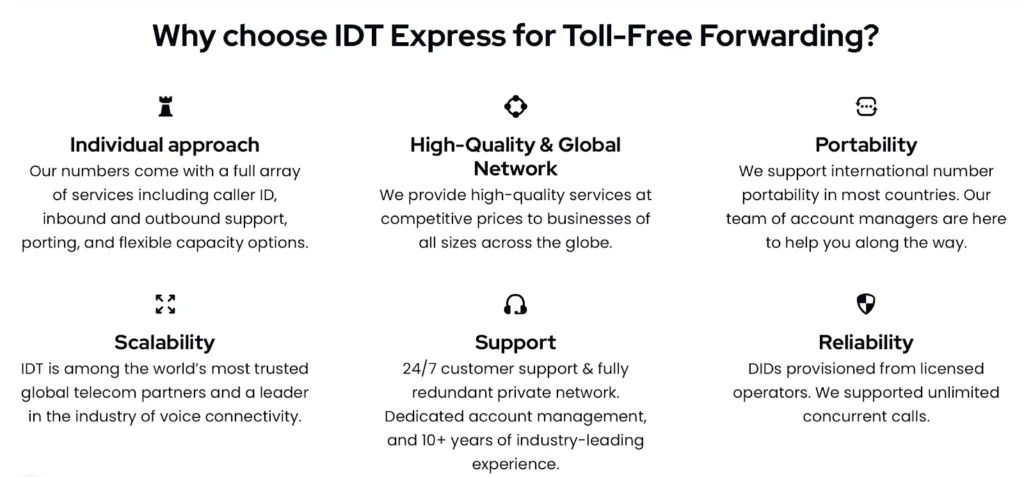
- How close to the carrier am I buying? A provider reselling someone else’s toll-free service adds a margin layer. A provider that is itself a carrier, or close to one, doesn’t.
- Is billing per-second or per-minute? Per-minute billing rounds every call up to the next whole minute. On high call volumes, that rounding alone can add 15–30% to the bill versus per-second billing.
- How many countries, from one integration? If you operate internationally, a provider offering toll-free numbers across many countries from a single account beats stitching together several regional providers.
- What does the routing path look like? A provider that can hand your calls off directly, with minimal hops, delivers both lower cost and better call quality than one that adds re-routing legs.
A business that answers those four questions well will usually find it’s paying far less for identical service than the retail-first alternatives.
Toll-free forwarding and modern voice infrastructure
Toll-free forwarding used to mean routing calls to a desk phone or a call centre. Increasingly, the destination is a SIP trunk feeding a modern platform — a cloud contact centre, a UCaaS system, or an AI voice agent. The toll-free number is the front door; SIP trunking is what the call flows through once inside.
For businesses building on that kind of infrastructure, toll-free forwarding is one piece of a larger picture that also includes SIP trunking for the underlying voice channels and DID numbers for direct-dial inbound. The economics are the same throughout: the closer you buy to the carrier, the more margin stays in your business rather than a reseller’s.
The short version
Toll-free forwarding lets customers call you for free from anywhere and routes that call to wherever you choose. Setup is fast; the decision that matters is what happens underneath.
Because toll-free is a reverse-charge service where you pay for every inbound minute, the per-minute economics dominate the total cost — and most providers quote a retail rate with margin stacked over the wholesale carrier cost. Buying closer to the carrier, insisting on per-second billing, and flattening your routing so calls aren’t billed as multiple legs are the three levers that separate a cost-effective toll-free setup from a leaky one.
The calls sound the same either way. The bill doesn’t.
Frequently asked questions
What is toll-free forwarding?
Toll-free forwarding is a service that lets customers call a toll-free number for free and automatically routes that call to a destination you choose — an office line, mobile, call centre, or SIP-based phone system anywhere in the world. The business that owns the number pays for the inbound minutes instead of the caller. The number isn’t tied to a physical line; it’s a routing instruction you can redirect whenever you need to.
How does a toll-free number work?
Toll-free numbers are non-geographic, so when someone dials one, the telephone network performs a database lookup to find who owns the number and where they’ve asked calls to be routed. The call is then forwarded to that destination. In the US, toll-free numbers start with 800, 888, 877, 866, 855, 844, or 833; other countries have their own toll-free ranges. Because the number isn’t fixed to a location, the owner can point it to any destination and change it at any time.
How much does toll-free forwarding cost?
Toll-free forwarding is billed to the number owner, typically per minute, under one of three models: pay-as-you-go (highest per-minute rate, no commitment), minutes-included plans (a monthly bundle at a better rate), and high-volume packages (lowest per-minute rate for heavy, consistent volume). The important detail is that most providers quote a retail rate that includes their margin over the underlying wholesale carrier cost. On high call volumes, buying closer to the carrier and insisting on per-second rather than per-minute billing can significantly reduce the total.
Can I get a toll-free number for another country?
Yes. Toll-free numbers are available with country-specific prefixes, letting a business present a local, free-to-dial number in markets where it has no physical office. Calls to that number route back to wherever your team actually is. IDT Express offers toll-free numbers across 60+ countries from a single account, which is more efficient than sourcing separate providers in each market.
What is the difference between a toll-free number and a DID number?
A toll-free number is free for the caller and paid for by the business receiving the call, and it’s non-geographic. A DID (Direct Inward Dialing) number is a standard direct-dial number, usually geographic (tied to a city or region), where normal calling charges apply to the caller. Businesses often use both — toll-free numbers for customer-facing support and sales lines where removing the cost barrier matters, and DID numbers for direct-dial local presence.
Why is my toll-free bill higher than expected?
The most common hidden cause is multi-leg routing. If your toll-free number forwards to a destination that then re-routes the call again — for example, toll-free to an office trunk to a call-centre platform — each hop can be a separately billed leg. A single customer call can become two or three billed minutes. Flattening the routing so the toll-free number forwards as directly as possible to the final destination reduces both the number of billed legs and call latency. Per-minute billing that rounds each call up to the next whole minute also inflates bills versus per-second billing.
IDT Express provides toll-free numbers across 60+ countries at wholesale carrier rates, with per-second billing and direct routing. Explore toll-free and DID numbers →