
Voice over Internet Protocol (VoIP) technology has revolutionized the way we communicate, offering a cost-effective and flexible alternative to traditional phone systems. This comprehensive guide will delve into the intricacies of phone VoIP systems, helping you understand their functionality, the various types available, and how to set them up effectively. As businesses and individuals increasingly seek efficient communication solutions, understanding VoIP becomes essential. This article will address common pain points, such as choosing the right system and ensuring security, while providing practical solutions. We will explore key features, benefits, and the best providers in the market today, ensuring you have all the information needed to make informed decisions.
What Is a VoIP Phone and How Does It Work?
VoIP phones are devices that utilize Voice over Internet Protocol technology to transmit voice communications over the internet instead of traditional telephone lines. This technology converts voice signals into digital data packets, which are then transmitted over the internet. The primary benefit of VoIP phones is their ability to reduce communication costs while providing enhanced features compared to conventional phone systems. Understanding how VoIP works is crucial for leveraging its advantages effectively.
Defining VoIP Phones, SIP Phones, and IP Phones
VoIP phones can be categorized into several types, including SIP phones, IP phones, and analog adapters. SIP (Session Initiation Protocol) phones are designed specifically for VoIP communication, allowing for seamless integration with various VoIP services. IP phones are digital phones that connect directly to the internet, bypassing traditional phone lines. Analog adapters enable traditional telephones to connect to VoIP networks, providing a bridge between old and new technologies. Each type serves different user needs, making it essential to choose the right one based on specific requirements.
How the SIP Protocol Enables Voice over IP Communication
The SIP protocol plays a vital role in VoIP communication by establishing, maintaining, and terminating voice calls over the internet. It facilitates the signaling process, allowing devices to communicate effectively. SIP enables features such as call forwarding, voicemail, and conference calling, enhancing the overall user experience. By understanding the SIP protocol’s functionality, users can better appreciate the capabilities of their VoIP systems and utilize them to their full potential.
The effectiveness of SIP-based VoIP services has been extensively evaluated, particularly concerning their performance and scalability in modern communication scenarios.
Evaluating SIP VoIP Performance & Scalability
SIP-based service creation in the Telephone-IP convergence scenario has been evaluated. SIP-based VoIP services were tested in order to evaluate their performance and scalability.
Scalability and performance evaluation of a JAIN SLEE-based platform for VoIP services, M Femminella, 2009
Which Types of VoIP Phones Are Available for Business and Personal Use?
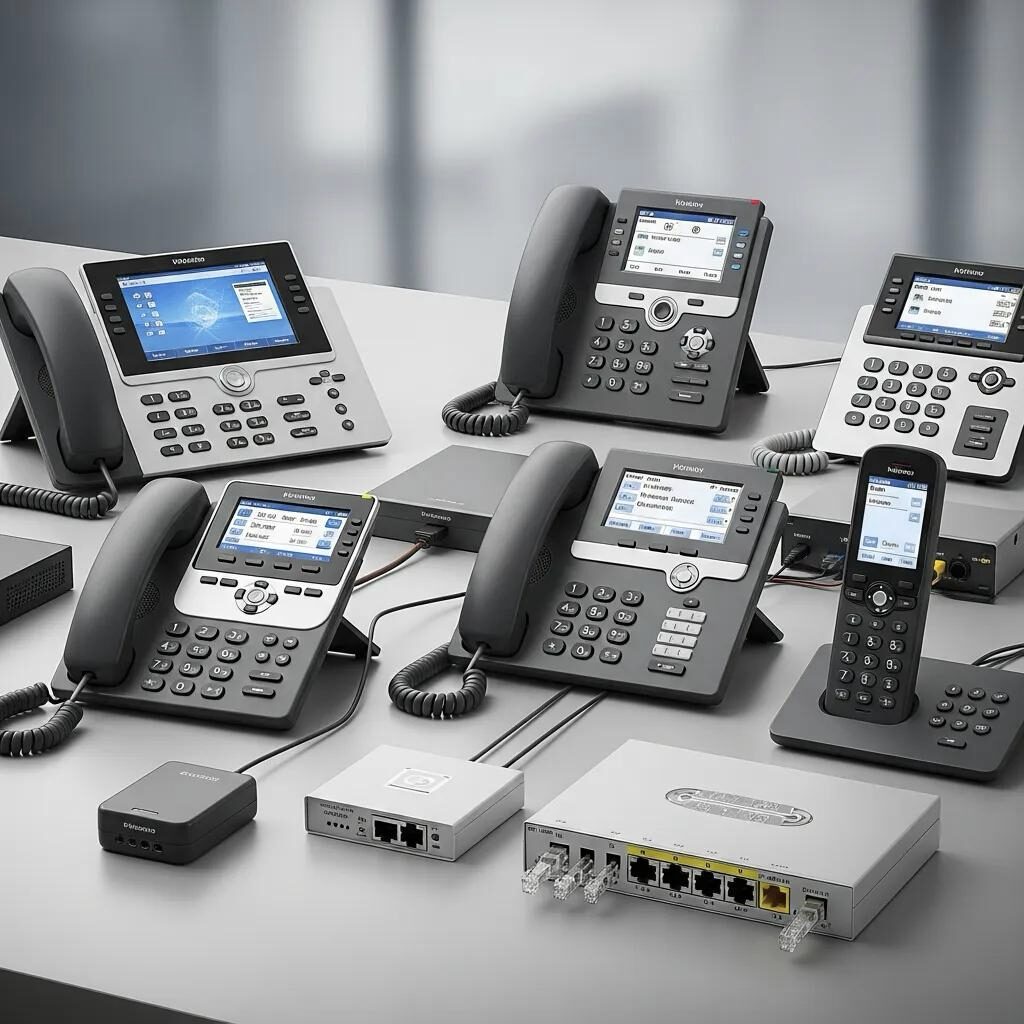
When considering VoIP phones, it’s essential to understand the various types available for both business and personal use. Each type offers unique features and benefits tailored to different user needs.
Comparing SIP Phones, IP Phones, and Analog Adapters
| Phone Type | Features | Pros | Cons |
| SIP Phones | Designed for VoIP, supports advanced features | High compatibility, flexible | May require specific setup |
| IP Phones | Connects directly to the internet | Easy to use, no adapters needed | Limited to internet access |
| Analog Adapters | Connects traditional phones to VoIP | Cost-effective for existing phones | May lack advanced features |
This comparison highlights the strengths and weaknesses of each phone type, helping users make informed decisions based on their specific needs.
Choosing the Right VoIP Phone System for Your Needs
Selecting the right VoIP phone system involves considering several factors, including the size of your business, the features you require, and your budget. Here are some key considerations:
- User Needs: Assess the specific communication needs of your business or personal use.
- Budget: Determine how much you are willing to invest in a VoIP system.
- Scalability: Choose a system that can grow with your needs, accommodating more users as required.
By evaluating these factors, you can select a VoIP phone system that aligns with your requirements and budget.
How to Set Up and Conp Your VoIP Phone System Effectively?
Setting up a VoIP phone system can seem daunting, but with the right guidance, it can be a straightforward process.
Step-by-Step VoIP Phone Setup and Configuration Guide
- Choose a VoIP Provider: Research and select a reliable VoIP service provider that meets your needs.
- Obtain Necessary Equipment: Purchase or lease the required VoIP phones and any additional hardware, such as routers or adapters.
- Connect Your Devices: Follow the manufacturer’s instructions to connect your VoIP phones to your internet network.
- Conp Settings: Access the phone’s settings to conp your VoIP account details, including SIP credentials.
- Test the System: Make test calls to ensure everything is functioning correctly.
By following these steps, you can effectively set up your VoIP phone system and start enjoying its benefits.
Common Troubleshooting Tips for VoIP Phone Issues
- Check Internet Connection: Ensure your internet connection is stable and functioning.
- Restart Devices: Sometimes, simply restarting your VoIP phone or router can resolve connectivity issues.
- Update Firmware: Keep your VoIP phone’s firmware updated to ensure optimal performance and security.
These troubleshooting tips can help users quickly resolve common issues and maintain a reliable VoIP phone system.
What Are the Key Features and Benefits of Business VoIP Phone Services?
Business VoIP phone services offer a range of features that enhance communication and collaboration. Understanding these features can help businesses leverage VoIP technology effectively.
Exploring Call Management, HD Voice, and Unified Communications
Business VoIP services typically include features such as:
- Call Management: Advanced call routing, forwarding, and voicemail options streamline communication.
- HD Voice: High-definition voice quality enhances clarity during calls, improving communication effectiveness.
- Unified Communications: Integration with other communication tools, such as video conferencing and messaging, fosters collaboration.
These features collectively enhance the overall communication experience for businesses, making VoIP an attractive option.
| Feature | Description | Benefit |
| Call Management | Advanced routing and voicemail options | Streamlined communication |
| HD Voice | High-definition audio quality | Improved clarity and understanding |
| Unified Communications | Integration with messaging and video tools | Enhanced collaboration |
This table summarizes the key features of business VoIP services, illustrating their benefits for users.
How Cloud Telephony Enhances VoIP Phone Service
Cloud telephony plays a significant role in enhancing VoIP phone services by providing scalability, flexibility, and cost savings. With cloud-based systems, businesses can easily add or remove users, access features from anywhere, and reduce the need for on-premises hardware. This flexibility allows businesses to adapt to changing needs without significant investments in infrastructure.
Further emphasizing the benefits of cloud-based solutions, research highlights the importance of comprehensive feature sets in hosted VoIP and unified communications.
Hosted VoIP & Unified Communications Features
Hosted VoIP puts the call-processing power at the vendor’s site. Be sure the VoIP/UC feature set is comprehensive. VoIP and unified communications: internet telephony and the future voice network, 2012
How to Ensure Security and Reliability in Your VoIP Phone System?
Security and reliability are critical considerations for any VoIP phone system. Implementing best practices can help protect your communications and ensure consistent performance.
Best Practices for VoIP Phone Security and Encryption

To enhance the security of your VoIP phone system, consider the following best practices:
The importance of securing SIP-based VoIP communication is further underscored by research focusing on practical authentication mechanisms.
Secure SIP-Based VoIP Communication Architecture
Recent years the Session Initiation Protocol (SIP) is commonly used in establishing Voice over IP (VoIP) calls and has become the centerpiece for most VoIP architecture. Consequently, the security VoIP is a crucial requirements for its adoption. Many authentication and key agreement schemes are proposed to protect the SIP messages, however, lacking concrete implementations. This paper studies the performance impact of using key agreements for making a SIP-based VoIP call and designs a practical and efficient authentication mechanism to deploy our VoIP architecture, providing a concrete and feasible architecture to secure a VoIP call.
Implementing a secure VoIP communication over SIP-based networks, JS Leu, 2018
- Use Strong Passwords: Ensure all devices and accounts are protected with strong, unique passwords.
- Enable Encryption: Utilize encryption protocols such as TLS and SRTP to protect voice data during transmission.
- Regularly Update Software: Keep all devices and software updated to protect against vulnerabilities.
By following these practices, users can significantly enhance the security of their VoIP phone systems.
Monitoring Network Quality of Service for Optimal Performance
Monitoring network quality of service (QoS) is essential for maintaining optimal VoIP performance. QoS measures can help identify issues such as latency, jitter, and packet loss, which can negatively impact call quality. Implementing QoS measures ensures that voice traffic is prioritized over other types of data, leading to a more reliable communication experience.
Which VoIP Phone Providers and Plans Offer the Best Value in 2024?
As the VoIP market continues to evolve, various providers offer competitive plans tailored to different user needs. Understanding these options can help users find the best value.
Comparing Top Business VoIP Phone Service Providers
| Provider | Key Features | Pricing Model |
| Net2Phone | White-Glove Onboarding, Intelligent Call Management, Massive International Reach, AI Agents | Subscription-based |
| RingCentral | Advanced call management, HD voice, unified communications | Subscription-based |
| Nextiva | Unified communications, cloud telephony, excellent customer support | Subscription-based |
| 8×8 | Flexible plans, global coverage, integrated video conferencing | Subscription-based |
This table compares some of the top VoIP providers, highlighting their key features and pricing models. By evaluating these options, users can select a provider that aligns with their needs and budget.
Understanding Pricing, Features, and Service Plans
When choosing a VoIP provider, it’s essential to understand the pricing structures and features included in each plan. Many providers offer tiered pricing based on the number of users and features required. By carefully reviewing these plans, users can find a solution that fits their budget while meeting their communication needs.
In conclusion, understanding phone VoIP systems is crucial for anyone looking to enhance their communication capabilities. By exploring the various types of VoIP phones, their features, and the best providers, users can make informed decisions that align with their needs. With the right setup and security measures in place, VoIP technology can significantly improve both personal and business communication.
Harnessing the Power of VoIP for Modern Communication
Understanding and implementing a Voice over Internet Protocol (VoIP) phone system is essential for modern communication, offering cost savings, flexibility, and a rich set of advanced features like HD Voice and Unified Communications. This guide covered the fundamentals of how VoIP works, the different types of phones (SIP, IP, Analog Adapters), key setup steps, essential features for business use, and critical security considerations. By carefully evaluating user needs, budget, and provider offerings, businesses and individuals can select a reliable, scalable system that optimizes their communication strategy.
Partner with the Backbone of Global VoIP: IDT Express
While choosing the right endpoints and service plan is vital, the quality of your VoIP experience ultimately relies on the underlying network infrastructure. Since 2010, IDT Express has served as the silent backbone for thousands of VoIP Phone Service Providers globally, ensuring reliable and high-quality voice termination.
IDT Express, powering your VoIP Service:
- Established Reliability: Providing crucial routes and phone number services since 2010.
- Massive Scale: Annually terminating over 7.4 Billion minutes of voice traffic.
- Global Reach: Serving more than 140 countries worldwide.
- Trusted by the Industry: Supporting a global customer base of over 12,000+ carriers and service providers.
Is your VoIP service provider built on a reliable, globally scaled network? If you are a VoIP Service Provider seeking unparalleled termination quality and reach, or an end-user seeking the best possible call clarity and connection, ask your current provider about their network partner. Choose a provider powered by the stability and reach of IDT Express to ensure your business communication is always crystal clear and globally connected.