The customer is mid-rant, the AI voice agent is holding its own, and the call center dashboard is glowing green. Then the transcript freezes. The agent stops responding. Silence. On the customer’s side it feels like hanging up without warning. On the business side it looks like a sudden drop in conversion, a spike in escalations, and a room full of humans scrambling to figure out what just died. This isn’t a rare edge case. One industry report found that 73% of AI agent deployments fail to meet reliability expectations in their first year, largely because the underlying infrastructure and failover strategy were an afterthought.
When a human agent’s line drops, everyone understands what happened. When an AI engine fails mid-call, it is far murkier. Was it the model? The network? The speech layer? The orchestration logic? To the caller, it all blurs into a single experience: “Your AI is flaky, and I don’t trust it.” That erosion of trust is brutal for adoption. The difference between a promising pilot and a scaled, dependable AI-assisted contact center often comes down to how well the system is designed to fail gracefully.
This is where failover and redundancy matter. Not as buzzwords on a slide, but as concrete engineering and operational choices that decide whether a call recovers in a blink or collapses into an awkward apology email and a churned customer. Understanding what actually happens when the AI engine fails mid-call makes it much easier to ask the right questions of vendors, architects, and SRE teams-and to design something resilient instead of fragile.
Why AI Engines Fail During Live Calls
During a live call, an AI “engine” is rarely a single component. It is more like a relay race between speech recognition, language understanding, business logic, tools or APIs, and text-to-speech-all stitched together with network calls and glue code. A hiccup in any one of those layers can surface as “the AI stopped talking.” Research that examined failures across a large collection of AI systems identified common issues ranging from brittle assumptions about inputs to poorly handled edge cases and integration faults, based on an analysis of around 160 papers and repositories on AI system failures. Mid-call outages often look just like those research examples, only under higher pressure.
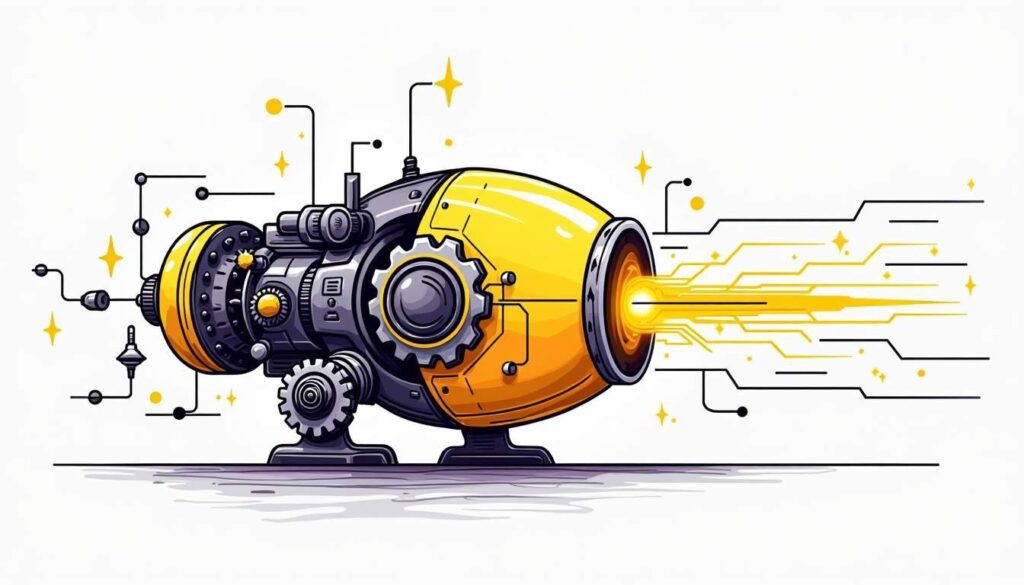
Some failures are purely infrastructure-driven: a region-level cloud issue, a saturated GPU cluster, or a misconfigured autoscaling rule that leaves the AI starved of capacity right when call volume spikes. Others are application bugs that only emerge in conversational settings-like a logic path that never returns a response if a user changes topics too quickly, or an exception thrown by a tool call that no one wired into the error handler. Even “soft” failures matter: a latency spike that turns snappy responses into multi-second pauses can feel like the AI disappeared, even if it eventually recovers.
Then there are dependency failures. Many AI calling systems depend on third-party APIs for identity checks, order lookups, or payment processing. If those services stall or time out, the AI may be left waiting indefinitely. Without thoughtful timeouts and fallbacks, that wait looks to everyone involved like a dead engine. The key pattern across all of these causes is simple: if you assume everything will work perfectly, a single glitch anywhere can bring the entire experience down.
What It Feels Like on the Call When the AI Breaks
From the caller’s perspective, the mechanics of the failure don’t matter. What they experience are symptoms: sudden silence, repeated “sorry, I didn’t get that” prompts, or the AI talking over them and then cutting out. Studies on conversational systems have shown that specific failure modes-like capturing too much of what people say or misinterpreting overlapping speech-are especially damaging to trust, because they feel intrusive or incompetent rather than merely glitchy. One line of research into voice assistant behavior highlights how overcapturing users’ input can derail user trust when assistants fail mid-interaction, and the same dynamic plays out when an AI phone agent misfires.
On a live call, that trust deficit snowballs quickly. A caller who just shared sensitive data and then hears silence is going to worry about where that information went. A customer who has repeated a problem several times and then gets dropped will be harsher on the AI than they would be on a human agent. People already expect technology to be “always on,” so any mid-call break is judged against a very high bar. Once callers lose confidence that the AI will stick with them to resolution, they will insist on human agents, forcing the business to staff for the worst case while getting none of the upside from automation.
Internally, the experience can be just as frustrating. Supervisors see calls terminated by the system with vague reasons like “engine timeout.” Agents receiving failed transfers from an AI may not have the context they need because the AI session died before saving conversation state. Operations teams get buried in logs that do not clearly distinguish between a model-level issue, a network glitch, and an upstream outage. Without a robust failover and redundancy strategy, every failure turns into a mini forensic investigation instead of a quick, contained event.
Failover: Keeping Conversations Alive When Something Breaks
Failover is the practice of having a “next option” ready when something fails, and switching to it fast enough that users barely notice. In AI calling systems, that can mean routing traffic to a different model, a different region, a simplified dialogue flow, or even a human backup. The best failover strategies are designed on the assumption that components will fail unpredictably. Research on AI system resilience has shown how thoughtful replication and failover can drastically shrink outage windows; one experimental system called FailLite, for example, achieved a mean time to recovery of about 175.5 milliseconds with only about a 0.6% drop in accuracyby combining heterogeneous replication with intelligent failover choices.
For a live call, the raw speed of failover is only half the story. The other half is how gracefully the conversation is preserved. A simple approach might be to tear down the AI session and immediately send the call to a human queue. That is better than leaving the caller in silence, but it still feels jarring if the human has none of the prior context. A more mature design keeps the interaction state externalized-so if the primary AI engine fails, a backup process or a human agent can pick up with access to the conversation history, intent, and any already collected data.
Failover paths should be hierarchical rather than binary. The first step might be a quick retry in another availability zone; if that fails, a backup model with fewer dependencies; and if that fails, a seamless transfer to a human. At each stage the caller should hear a short, honest explanation that matches the brand’s tone, such as “I’m having trouble on my side, I’m moving you to a specialist who can help.” The technical switch and the conversational switch need to be designed together, not bolted on separately.
Redundancy Patterns That Actually Work for AI-Powered Calls
Redundancy is what makes failover possible. It is the practice of having more than one way to perform critical tasks so that losing any single piece does not bring everything down. In AI calling, that can mean multiple model providers, multiple deployment regions, or multiple paths for critical business functions. The goal is not just having duplicates; it is having independent, well-tested alternatives that can carry real production traffic when needed, not just in lab scenarios.

One useful lens is to think about different layers of redundancy. At the infrastructure layer, running AI workloads across isolates-separate clusters, regions, or even clouds-reduces the risk that a localized issue knocks out all calls. At the model layer, having an alternative model or version ready allows graceful downgrades if the primary model starts timing out or misbehaving. At the workflow layer, building a “minimal viable conversation” path that skips non-essential steps means the system can keep helping callers even if extras like recommendation APIs or analytics pipelines are unavailable.
There is also strategic redundancy at the project level. Analyst forecasts around generative AI projects warn that a meaningful share of initiatives will never make it to stable, long-term production. For example, one prediction suggests that around 30% of generative AI projects are likely to be abandoned by the end of 2025. That should be a wake-up call: if a business is going to invest in AI calling, building resilience and redundancy into the design from the start is one way to avoid becoming part of that abandonment statistic. Teams that treat reliability as a first-class requirement from day one are far more likely to see their AI engines survive real-world traffic, not just demos.
From Outages to Learning: Monitoring, Incidents, and Post-Mortems
Even the best redundancy plan will not prevent every failure. What separates reliable AI calling platforms from fragile ones is how they learn from each incident. Many organizations still struggle here. A survey of real-world cloud failures found that more than 70% of organizations do not perform thorough post-mortems after service disruptions, which means they repeatedly trip over the same issues instead of systematically eliminating them. If that mindset carries into AI deployments, the same mid-call failures will keep resurfacing in slightly different forms.
For AI engines on calls, effective learning starts with observability. Systems need more than just latency and error rate dashboards; they need structured signals about the conversational experience itself. That can include markers for dead air, repeated error prompts, or abnormal escalation patterns to humans. When a failure occurs, the incident response flow should capture not just the technical root cause but also the user impact: how many calls ended abruptly, how many customers had to repeat themselves, how many were discussing high-risk or high-value topics at the time.
As AI becomes more entangled with critical operations, incident data itself grows large and complex. Manually classifying and correlating every report or log snippet does not scale. To address this, researchers have started proposing frameworks that automatically group new failure reports with similar past incidents using semantic similarity modelingso that teams can spot recurring AI failure patterns more quickly. For a contact center or communications platform, adopting a similar approach-automated clustering of incident reports, user complaints, and call logs-can turn a stream of messy data into a map of the most damaging AI failure modes to prioritize.
Designing for Trust: Policies, People, and Clear Ownership
Technical redundancy is only one side of reliability. Trust also depends on how clearly responsibilities are defined when things go wrong. When an AI engine fails mid-call, who owns the incident? Is it the platform team that runs the LLM gateway, the networking group, the vendor providing the model, or the business unit that controls the call flows? Without clear ownership, responses are slow, communication is inconsistent, and customers sense the chaos.
Defining incident playbooks specifically for AI-assisted calls helps. Those playbooks can spell out when to switch traffic to backup models, when to disable risky features like tool calls, and when to turn the AI off entirely and route all calls to humans. They can define how to communicate externally-what callers hear in real time-and internally, so that executives and front-line agents get the same, accurate picture. Reliability improves when everyone knows that a mid-call AI failure is not a bizarre one-off, but a known, rehearsed scenario with a clear plan.
Trust is also shaped by how businesses talk about AI limitations up front. Overpromising “fully autonomous agents” and “zero downtime” sets expectations that no real system can meet. Being transparent that AI is backed by robust failover, monitored by humans, and supported by clear escalation paths creates a healthier relationship with customers and regulators alike. Then, when failures do happen, they are interpreted as rare exceptions in a well-managed system rather than evidence that the entire approach is reckless.
Questions to Ask Vendors and How to Get Started
For leaders evaluating AI calling platforms or building their own, the most practical step is to start asking better questions about failure. Instead of “What is your uptime?” ask “What exactly happens to an individual caller if your AI engine stops responding mid-call?” Push for specifics: how quickly can they switch to a backup model, how is conversation state preserved, and how is the caller informed. Ask to see not just success metrics, but records of past incidents and how they were handled.
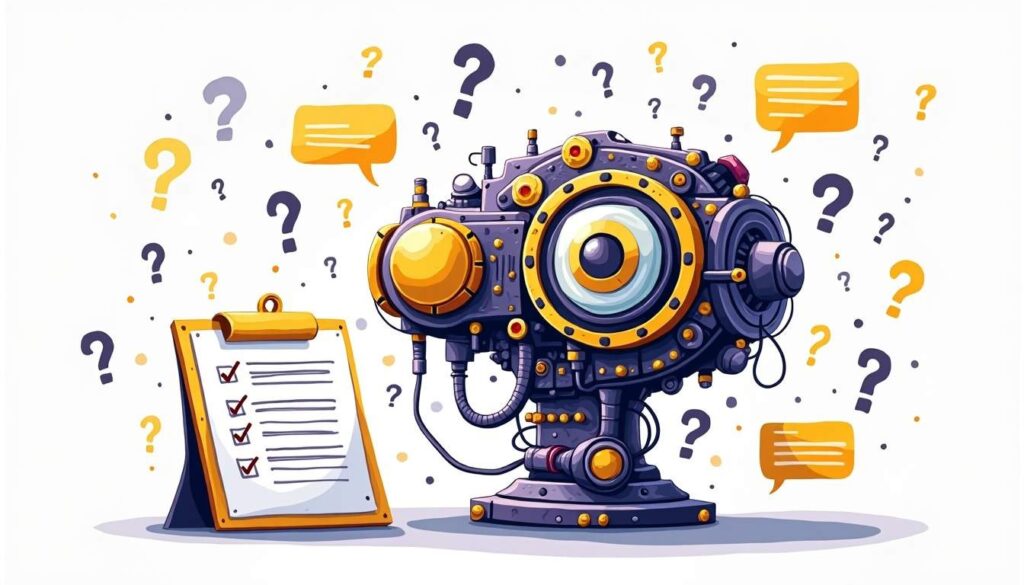
Cost is another angle that often gets overlooked until it is too late. AI outages are not just a technical inconvenience; they can have serious financial impact. In sectors like financial services, industry analysis has estimated that the average annual cost of AI-related service downtime can reach about $152 million per organizationhighlighting how AI service outages can become a major digital crisis. Even if a given business is much smaller, the relative pain of lost calls, damaged reputation, and firefighting time can be just as severe. Building robust failover and redundancy into AI calling is not a luxury; it is risk management.
Getting started does not require a massive rewrite. Begin by mapping the current call flow and identifying the points where a single failure would drop the conversation. Introduce simple, observable fallbacks: backup prompts, human transfer paths, or secondary models for critical intents. Run game-day exercises where you intentionally break pieces of the system during controlled tests and watch how calls behave. Over time, layer in more sophisticated redundancy and incident tooling. The goal is clear: when the AI engine fails mid-call-and at some point it will-the caller should still feel taken care of, and the business should treat it as a routine, well-understood event rather than a disaster.
Ensure Your Voice AI Agents Never Miss a Beat with IDT Express
When it comes to integrating AI into your call operations, you need a partner that understands the importance of reliability and trust. IDT Express offers Business-Ready Voice AI Agents that are designed to keep your conversations flowing smoothly, even when the unexpected happens. With our native telephony integration, scalable deployment, and a promise of ROI within weeks, you can turn AI agents into your team’s most reliable members. From handling inquiries to managing schedules, our Voice AI not only enhances performance but also drives measurable ROI by automating key customer interactions. Don’t let AI failures disrupt your business—Explore Our Services today and experience the resilience and efficiency of IDT Express’s Voice AI solutions.