A customer reads a payment card number to an agent. Another caller explains a complex medical condition. A third demands to know exactly how their data is being stored under GDPR. All three conversations are probably being recorded, and increasingly, they are being analyzed or even conducted by AI. According to one recent regulatory intelligence report, 96% of respondents rely on call and voice-recording solutions to capture verbal communications. That level of dependence means the way organizations deploy AI around call recording has become a direct compliance risk – and a major opportunity.
Compliance teams now sit at a crossroads. Manual QA sampling and after-the-fact investigations cannot keep up with AI-driven contact volumes or complex regulatory expectations. At the same time, regulators are paying close attention to automated communication, especially where financial data, health information, and cross-border consumer privacy intersect. The challenge is no longer just “Are we recording?” but “Are our AI and recording workflows provably safe, lawful, and defensible under PCI, HIPAA, and GDPR?”
Why call recording is central to PCI, HIPAA, and GDPR compliance
Call recording used to be about quality monitoring and dispute resolution. For regulated businesses, it is now a primary control. PCI requires that sensitive authentication data such as full card numbers and security codes are not stored in a way that can be reconstructed from recordings. HIPAA expects that any recorded call containing protected health information is treated as part of the medical record, with all the access controls and safeguards that implies. GDPR adds yet another layer, asking whether there is a lawful basis to record, whether the recording is strictly necessary, and how long it is retained.
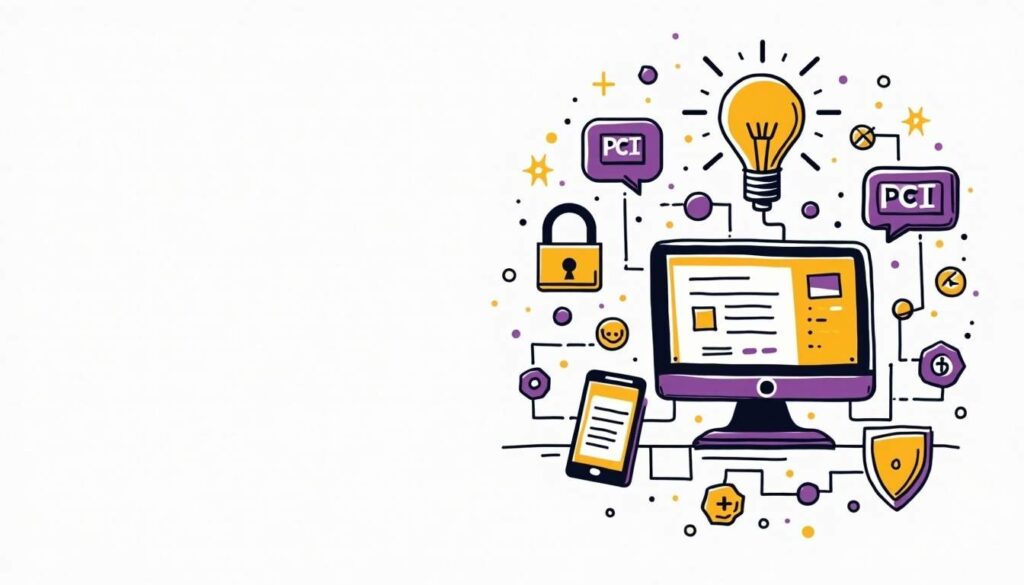
AI intensifies all of this. Voicebots collect payment details. Speech analytics engines transcribe and tag calls. Large language models summarize conversations, create follow-up emails, or suggest next-best actions. Each of these steps can touch payment card data, health information, or identifiable personal data. When AI is in the loop, call recording is no longer a static archive; it becomes a living data pipeline that must be governed from the first spoken word through to deletion.
Different rules, same pressure to capture evidence
Despite their differences, PCI, HIPAA, and GDPR all pull organizations toward one shared reality: if something important happens in a call, it must be provable later. Disputed authorizations, consent for a medical treatment, or approval for data processing often hinge on what was said and how clearly it was explained. Regulators and courts expect organizations to show not only that a policy exists, but that it was actually followed in individual interactions. That expectation naturally pushes businesses to record more, transcribe more, and analyze more – precisely where AI tools excel, and where governance must keep up.
Moreover, the implications of these regulations extend beyond mere compliance; they shape the very culture of communication within organizations. Employees must be trained not only to follow protocols but also to understand the significance of their words and actions during calls. This cultural shift can lead to improved customer interactions, as representatives become more mindful of the information they share and the commitments they make. As organizations invest in compliance training and technology, they cultivate an environment where transparency and accountability are prioritized, ultimately enhancing trust with customers and stakeholders alike.
Furthermore, the integration of advanced analytics into call recording processes allows organizations to derive actionable insights from their interactions. By leveraging AI-driven tools, businesses can identify trends in customer inquiries, detect potential compliance risks, and even gauge customer sentiment in real-time. This proactive approach not only aids in regulatory adherence but also empowers organizations to refine their strategies and improve service delivery. As the landscape of compliance continues to evolve, the ability to harness data effectively will be crucial for maintaining competitive advantage while ensuring that all regulatory requirements are met.
The compliance risks hiding in AI-powered call recording
AI promises scale and efficiency, but it also raises the stakes when something goes wrong. One case stands out: a fintech firm agreed to pay $95 million in TCPA settlements in 2023 over automated calls. The issue was not just the calls themselves; it was how automation magnified a compliance failure across thousands of consumers. The same dynamic applies when AI is used to handle or analyze recorded conversations. If a consent workflow is misconfigured or a bot script violates calling rules, the problem spreads at machine speed.
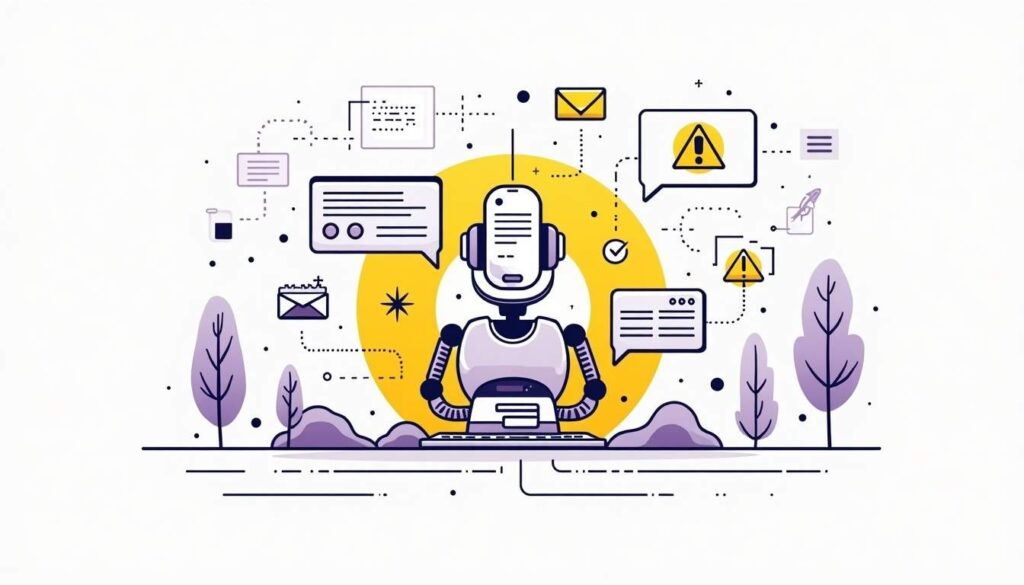
Security risks also change character in AI-heavy environments. One healthcare-focused study found that attackers with access to only 100–500 samples could compromise healthcare AI models, often achieving over 60 percent attack success regardless of the original dataset’s size. While that research focused on clinical AI, the lesson applies directly to call recording: small leaks of recorded or transcribed data can be enough to poison models, manipulate outputs, or reveal sensitive patterns. For PCI and HIPAA workloads, that means protecting not only the recordings themselves, but every dataset and model that touches them.
Security blind spots: from model training to insider misuse
The most dangerous failures often hide in the seams between systems. Recorded calls are pulled into training sets to “improve” AI agents, sometimes without a clear record of what kind of personal or payment data is included. Transcripts are exported into BI tools where access controls are weaker. Shadow copies of call records end up in vendor sandboxes or developer test environments. These are not hypothetical edge cases; they are exactly the kinds of pathways adversaries exploit, and they are the same places regulators look when assessing whether PCI, HIPAA, or GDPR controls are actually effective. A robust compliance posture demands visibility into how recorded audio, transcripts, and derived AI artifacts move across the stack, and who can touch them at each step.
How AI can actually reduce compliance violations
Despite the risks, AI is also one of the strongest available tools for making PCI, HIPAA, and GDPR compliance more reliable. Modern AI call-center platforms can automatically pause and resume recording when a caller reads card details, flag unmasked numbers in real time, and log exactly when and how consent was obtained. Some providers report that AI-enabled call centers can reduce compliance violations by 73% through automated pause features, real-time audit trails, and smart consent management. For compliance leaders under pressure to do more with leaner teams, that kind of reduction changes the conversation from firefighting to sustainable control.
AI also helps front-line staff navigate complex rules. Agents can receive live prompts when a conversation veers into PHI territory, when a GDPR disclosure is required, or when a caller appears to be in a higher-risk jurisdiction. One expert put it succinctly: AI transforms compliance from reactive firefighting into proactive risk management. Instead of discovering violations weeks later in a small QA sample, supervisors can see patterns as they form and intervene before regulators or plaintiffs do.
From reactive audits to proactive supervision
Traditional QA teams listen to a small slice of calls and manually score them against checklists. That model misses most real-world risk and delivers feedback too late to change behavior. AI-driven supervision changes the geometry of oversight. Every call can be scanned for PCI red flags like unmuted card numbers, for HIPAA concerns like unauthorized disclosure of patient identity, and for GDPR issues such as recording without a clear legal basis or inadequate disclosure. Instead of static scores, supervisors gain dynamic heatmaps of agents, scripts, and workflows that trend toward trouble. When combined with strong governance, this level of visibility allows organizations to calibrate controls to where risk is actually emerging, not where it is merely imagined.
Designing an AI call recording program that satisfies PCI, HIPAA, and GDPR
The goal is not to bolt AI onto existing call recording and hope compliance holds. A safer approach is to design an integrated program where AI, recording, and regulation are treated as one system. That starts with governance. Clear data-mapping exercises should show how a spoken word moves through audio capture, transcription, storage, analysis, and deletion. For each step, owners, lawful bases, retention rules, and access policies must be defined. When AI is introduced – whether as a voicebot, a summarization engine, or an analytics layer – it should be folded into this map, not treated as a black-box add-on.

Technology architecture matters as well. An industry report found that using more than one recording tool can put organizations at an additional 10% risk of increased compliance fines. Fragmented recording environments make it harder to prove completeness, enforce consistent redaction, or respond fully to data subject requests. Consolidating onto a small number of tightly governed platforms reduces that complexity. On top of that foundation, organizations can layer consent management workflows, PCI-aware redaction, HIPAA-compliant access controls, and GDPR-driven retention schedules that apply uniformly whether a call was handled by a human agent, an AI assistant, or a hybrid of both.
Practical checklist for compliance leaders
Bringing all of this together into an actionable plan is easier when framed as a set of recurring habits rather than a one-time project. Compliance leaders who succeed with AI-enhanced call recording tend to establish a shared playbook across legal, security, data, and operations teams. That playbook captures how to evaluate new AI capabilities before rollout, how to monitor them in production, and how to retire or retrain them when regulations or business models change. By treating AI call recording as a living program with clear ownership and feedback loops, organizations can harness its advantages while staying aligned with PCI, HIPAA, and GDPR expectations, even as those expectations continue to evolve.
Empower Your Call Operations with IDT Express’s Voice AI
As you navigate the complexities of PCI, HIPAA, and GDPR compliance in your call operations, IDT Express is here to transform your challenges into opportunities. Our Business-Ready Voice AI Agents are designed to seamlessly integrate with your existing systems, providing a scalable solution that delivers results quickly. With IDT Express, you can expect a Voice AI platform that not only understands the nuances of regulatory compliance but also drives significant ROI by enhancing customer support and lead management. Explore Our Services today and see how our AI Agents can become the most diligent members of your team, optimizing every customer interaction for growth and efficiency.